عربي
عربيFormula 1: Where Technology and Limitless Thrill Unite
Formula 1
Where Technology and Limitless Thrill Unite.
-
Tiktok

-
Instagram

-
Facebook

-
Linkedin

Formula 1: Where Technology and Limitless Thrill Unite
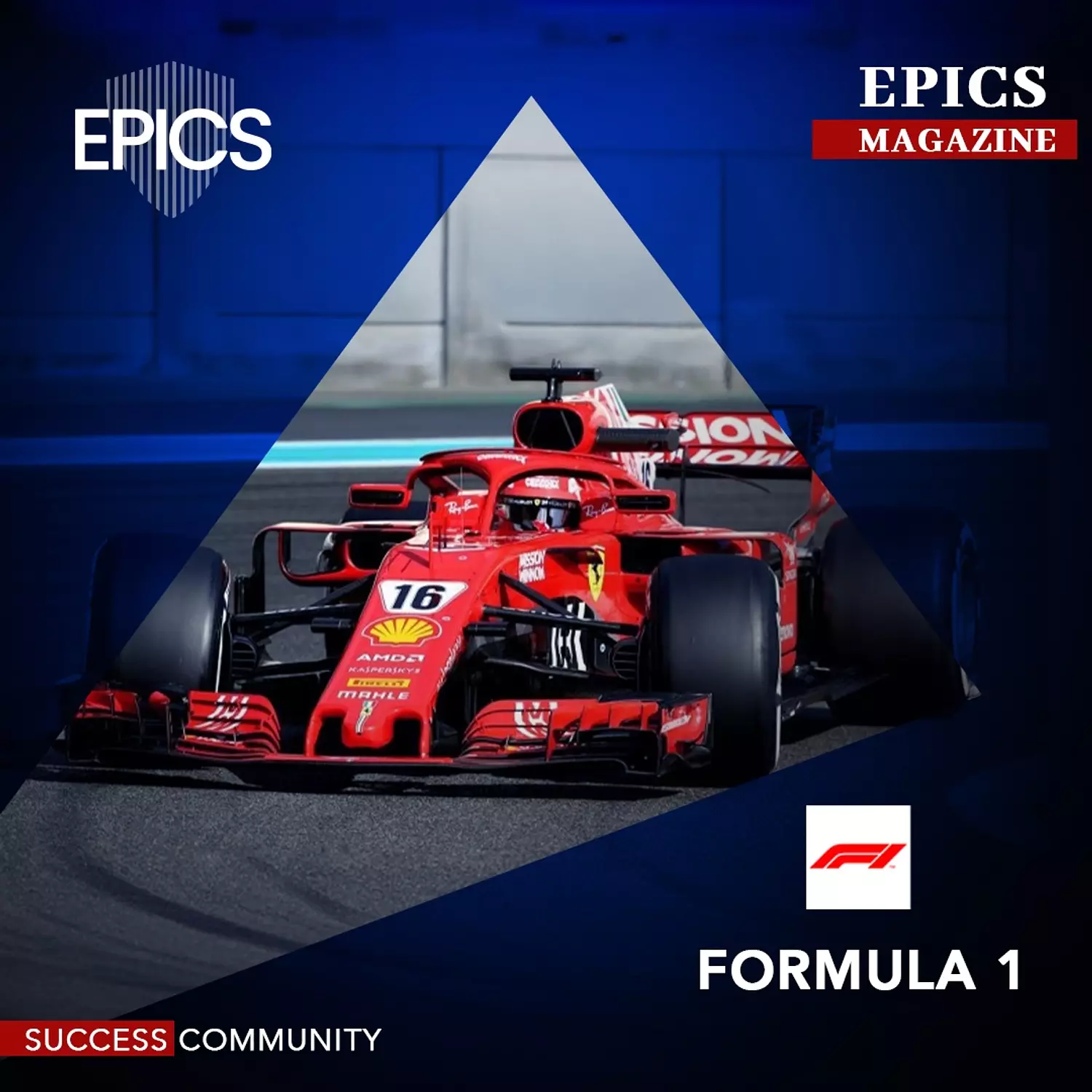
Formula 1 is the fastest and most famous car racing in the world, featuring ultra-fast cars designed with the latest technologies. Major teams compete on thrilling circuits across the globe. Each race is full of excitement and skill, as drivers strive for the fastest lap and overtake each other with intelligence and courage. Formula 1 is not just a race; it's a blend of speed, technology, strategy, and sportsmanship.
Among the most famous drivers in history are Max Verstappen, Lewis Hamilton, and Michael Schumacher, who became champions thanks to their talent and dedication. Formula 1 is the FIA Formula One World Championship, the highest class of single-seater auto racing.
The idea of organizing unified rule car races began after World War II, when the Fédération Internationale de l'Automobile (FIA) saw the need to organize a world championship that would bring together the best drivers and racing teams from different countries. The FIA is the entity that proposed and implemented the establishment of this championship, and the first official World Championship for Drivers was adopted in 1950. The first official race within the Formula 1 championship was held at Silverstone in the United Kingdom on May 13, 1950.
Bernie Ecclestone's development of Formula 1 is one of the most prominent figures who transformed Formula 1 from a mere series of races into a massive global industry attracting millions of fans. In the 1970s, he took over the organization of the championship's commercial rights and changed the face of Formula 1 in terms of marketing and media.
The term "Formula" first appeared in 1930 and referred to the set of rules that competing cars had to adhere to. There were several different formulas defining the characteristics of cars allowed in various racing categories.
The story of Formula 1 began before its official launch, with its roots tracing back to European car races in the 1920s and 1930s. It was then known as Grand Prix racing. During that period, manufacturers such as Alfa Romeo, Mercedes-Benz, and Auto Union competed in races across the European continent.
In 1904, the Association Internationale des Automobile Clubs Reconnus (AIACR) was founded, which later became the Fédération Internationale de l'Automobile (FIA) in 1947. This organization played a pivotal role in setting the rules and regulations for races. In 1946, after World War II, the FIA began to establish unified rules for single-seater car races, and in 1947, the technical regulations for what was called Formula 1 were set. On May 13, 1950, the Formula 1 World Championship officially began with the first race يا at the Silverstone circuit in the United Kingdom.
The first World Championship consisted of only 7 races: 6 in Europe and the Indianapolis 500 in the United States. Italian Giuseppe Farina won the first Formula 1 race and became the first World Champion driving an Alfa Romeo. Teams such as Alfa Romeo, Ferrari, Maserati, and Talbot participated in the first championship.
Italian teams, especially Alfa Romeo and Ferrari, followed by Mercedes, dominated the championship in its early years. Juan Manuel Fangio emerged as the first great star of the championship, winning 5 world titles between 1951 and 1957. The cars of that era were relatively simple mechanically compared to today.
Since its establishment, Formula 1 has undergone significant gradual developments in technology, safety, and organization, transforming from relatively dangerous amateur races into a highly technical professional sport and one of the most popular and followed sports around the world.
Key Developments in Formula 1 History:
* 1950s and 1960s: The championship began with 7 races in 1950 and gradually expanded. The first Constructors' Championship was established in 1958 alongside the Drivers' Championship. The points system was changed several times to encourage competition.
* 1970s: The Formula One Constructors' Association (FOCA) was founded, led by Bernie Ecclestone.
* Early 1980s: The FOCA-FISA war led to the Concorde Agreement in 1981, marking the beginning of the era of commercial professionalism, major sponsorships, and global television broadcasting.
* 1990s to Present: The one-lap qualifying system (2003-2005) and then the knockout system (2006 onwards) were introduced. Sprint races were introduced in 2021. Races were organized in new continents: Asia, the Middle East, and greater expansion outside Europe. A budget cap of $145 million was imposed starting in 2021 to reduce the gap between teams. Aerodynamic developments (wings) and the emergence of turbo engines occurred.
* 1980s and 1990s: Some legendary teams and drivers dominated, and safety developments were made.
* Later: Technology advanced significantly, and new rules aimed at increasing competition were introduced.
* Modern Era: Hybrid engines were introduced, with a greater focus on sustainability and safety, and fierce competition between teams and drivers.
Formula 1 has witnessed tremendous developments in cars, rules, and safety, making it a global sport full of excitement and advanced technology.
Car Companies Participating in Formula 1:
Current Formula 1 Teams - 2024 Season:
* Scuderia Ferrari: Founded in the championship in 1950, the only team to have participated in every season. Achievements: 16 Constructors' Championships and 15 Drivers' Championships. 2024 Drivers: Charles Leclerc and Carlos Sainz.
* Mercedes-AMG Petronas: Factory team return in 2010. Achievements: Dominated the period 2014-2021 with 8 consecutive Constructors' Championships. 2024 Drivers: Lewis Hamilton and George Russell.
* Oracle Red Bull Racing: Founded in 2005. Achievements: 6 Constructors' Championships and 7 Drivers' Championships. 2024 Drivers: Max Verstappen and Sergio Pérez.
* McLaren F1 Team: Founded in the championship in 1966. Achievements: 8 Constructors' Championships and 12 Drivers' Championships. 2024 Drivers: Lando Norris and Oscar Piastri.
* Aston Martin Aramco: Became this name in 2021, formerly Racing Point/Force India. 2024 Drivers: Fernando Alonso and Lance Stroll.
* Alpine F1 Team: Founded under this name in 2021, evolved from Renault. 2024 Drivers: Pierre Gasly and Esteban Ocon.
Most Successful Companies in Formula 1 History:
* Ferrari: The team with the most wins and titles in the championship's history.
* Mercedes: Dominated the hybrid engine era (2014-2021).
* McLaren: Ferrari's historical rival, led by Ron Dennis.
* Williams: A dominant force in the 1980s and 1990s.
* Red Bull: Dominated in two periods (2010-2013 and 2022-present).
* Lotus: A pioneer of innovations in the 1970s and 1980s with Colin Chapman.
Future Companies:
* Audi: Will officially enter the championship in 2026 through the acquisition of the Sauber team.
* Cadillac: Has expressed interest in entering in the future.
* Porsche: Was close to entering but withdrew, with a potential reconsideration in the future.
Some current teams carry the names of sponsors or non-car manufacturing companies but are partly or wholly owned by car companies.
Historically, Formula 1 has seen the entry and exit of many car companies depending on economic and sporting conditions. With new regulatory changes and budget caps, the championship has become more attractive to car companies.
Car companies play a pivotal role in Formula 1, whether as full factory teams or engine suppliers, and represent the backbone of technological development in the championship.
Grands Prix in Formula 1:
Formula 1 races are called Grands Prix, and the name of the country or region where they are held is usually added. This term historically dates back to European car races in the early 20th century.
Evolution of the Number of Races Throughout History:
* Beginnings (1950s-1960s): The championship began in 1950 with only 7 races. During the 1950s and 1960s, the number of races ranged from 7 to 11 per year. Most races were held in Europe, with a few races in the Americas.
* Gradual Expansion (1970s-1990s): The 1970s saw an increase to 15-17 races. The 1980s stabilized around 16 races. The 1990s reached 17-18 races with greater geographical expansion.
* Modern Era (2000-2019): The number gradually increased from 17 to 21 races, with the entry of new markets such as China, Bahrain, Singapore, Abu Dhabi, South Korea, India, Russia, and Azerbaijan. Some traditional European races were dropped or rotated.
* Current and Future Season (2020 onwards): The 2024 season has 24 races, the highest number in the championship's history, with the addition of new races such as Saudi Arabia, Qatar, Miami, and Las Vegas. The framework agreement for the championship allows for up to 25 races per season.
2024 Season Races (24 Races):
* Asia and the Middle East: Bahrain Grand Prix, Saudi Arabian Grand Prix, Japanese Grand Prix, Chinese Grand Prix,Qatar Grand Prix, Singapore Grand Prix, Abu Dhabi Grand Prix.
* Europe: Emilia Romagna Grand Prix (Italy), Monaco Grand Prix, Spanish Grand Prix, Austrian Grand Prix, British Grand Prix, Hungarian Grand Prix, Belgian Grand Prix, Dutch Grand Prix, Italian Grand Prix (Monza), Azerbaijan Grand Prix.
* Americas: Miami Grand Prix (USA), Canadian Grand Prix, United States Grand Prix (Austin), Mexican Grand Prix.
* Oceania: Australian Grand Prix.
Distribution of Historical Grands Prix:
* Classic Races Held Since the Beginning or Shortly After: Britain, Monaco, Italy, Belgium.
* Races Held Then Discontinued: South Africa, Portugal, Argentina, Malaysia, South Korea, India, Turkey, Russia.
* Alternating Races: Some circuits alternate with each other, such as Hockenheim and Nürburgring in Germany previously.
The evolution of the number of Formula 1 races reflects the global growth of the sport and its spread outside the European continent, shifting from a primarily European championship to a truly global championship held across all continents except Africa and Antarctica.
Thus began the journey of Formula 1, which has continued for more than seven decades, evolving from limited races in Europe to a global championship held throughout the year in different continents.
Formula 1 races combine advanced technology, human skill, and strategy, making it one of the most exciting and popular sports around the world.
Leave a Reply
We welcome your thoughts and feedback on this post. Please keep your comment respectful, on-topic, and free of spam or promotional links. Your email address will not be published, and all comments are reviewed to maintain a constructive conversation
Required fields are marked *.