عربي
Silicon Valley: From Fruit Orchards to the Global Capital of Technology...
Silicon Valley
From Fruit Orchards to the Global Capital of Technology.
-
Tiktok

-
Instagram

-
Facebook

-
Linkedin

Silicon Valley: From Fruit Orchards to the Global Capital of Technology...
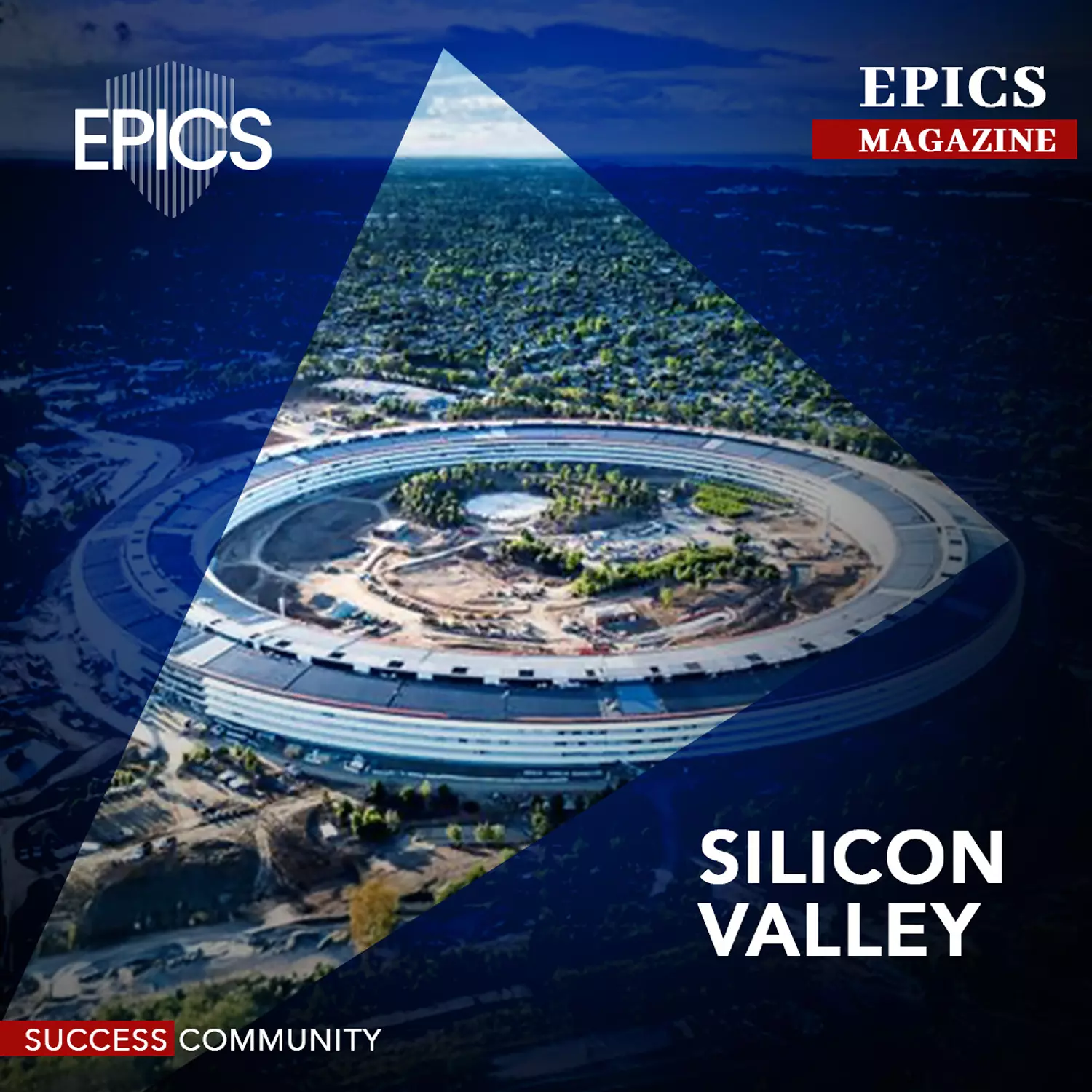
Silicon Valley is the name of a region located in northern California, USA, encompassing cities like San Jose, Palo Alto, Mountain View, and Cupertino. This area, known today as the home of tech giants like Google, Apple, and Facebook, has a long history that tells a story of a remarkable transformation from simple agricultural lands to the most important technological hub in the world.
The story of Silicon Valley began in the early 20th century as an agricultural region famous for its peach, apricot, and cherry orchards in the Santa Clara Valley. The mild climate and fertile soil made this area a thriving agricultural region, with orchards stretching across vast areas and the fruit canning industry flourishing.
During this period, the region was known as "The Valley of Heart's Delight" due to the beauty of its blossoming orchards in the spring.
The first turning point came in 1939 with the founding of Hewlett-Packard by William Hewlett and David Packard in a small garage in Palo Alto. This was the first true technology company in the region and the beginning of its shift from agriculture to technology. At the same time, the prestigious Stanford University played a significant role in attracting researchers and engineers, encouraging its students and professors to start new companies.
Throughout the 1940s and 1950s, the region began to witness rapid growth with the increasing demand for technology during World War II and the Cold War. The US government needed to develop advanced technologies for defense and communications, which spurred investment in technological research and development in the area.
The next stage of development came in the late 1950s with the founding of Fairchild Semiconductor in 1957. This company was a pioneer in developing semiconductor technologies, especially the silicon chips that gave the region its famous name, "Silicon Valley." This invention was revolutionary because it enabled the production of smaller and more efficient electronic circuits.
From Fairchild, many engineers went on to found their own companies, most notably Robert Noyce and Gordon Moore, who founded Intel in 1968. Intel later became the world's largest producer of microprocessors, which power most of today's computers.
This period also saw the development of what is known as "Moore's Law," which states that processing power roughly doubles every two years. This concept became the driving force behind continuous development in the technology industry.
The 1970s saw the next transformation with the emergence of the personal computer idea. In 1976, Steve Jobs and Steve Wozniak founded Apple in a garage in Los Altos, and they produced the first commercially successful personal computer, the "Apple II." This device changed the concept of a computer from being a tool for large companies and universities to a device that anyone could own and use at home.
At the same time, Bill Gates was developing the MS-DOS operating system with Microsoft, which later became Windows, the most widely used system in the world.
This period was full of innovations that changed how people work and interact with technology. The development of graphical user interfaces, the mouse, and personal printers were all inventions that originated or evolved in Silicon Valley.
The 1990s brought a new revolution with the spread of the internet. Companies like Netscape, which developed the first popular internet browser, and Yahoo, one of the first search engines, emerged in Silicon Valley. These companies paved the way for a new era of communication and information.
In 1995, eBay was founded as an electronic auction platform, and in 1998, Larry Page and Sergey Brin founded Google, which revolutionized how we search for information on the internet. The Google search engine has become the primary tool for billions of people to access information daily.
Throughout this journey, Silicon Valley faced numerous challenges. The dot-com bubble burst in 2000 led to the closure of many startups and the loss of thousands of jobs. However, this challenge also led to the development of more sustainable and profitable business models.
From this experience, companies learned the importance of building products that people genuinely need and developing diverse sources of income. This lesson helped in the emergence of the next generation of successful companies.
The new millennium witnessed another wave of innovation with the rise of social networks. Facebook, which moved from Harvard University to Silicon Valley, changed how people around the world communicate. Twitter, Instagram, and LinkedIn are all platforms that originated or grew in Silicon Valley.
At the same time, the smartphone revolution began with the launch of the iPhone by Apple in 2007. This device was not just a phone but a small computer that carried the internet in your pocket. Smartphone applications opened up new fields for business and services.
Today, Silicon Valley is leading a new revolution in artificial intelligence and machine learning. Companies like Google, Apple, and Facebook are investing billions of dollars in developing smart technologies that can understand language, images, and make decisions.
Self-driving cars, virtual reality, the Internet of Things, and cloud computing are all technologies being developed and improved in Silicon Valley. Tesla has revolutionized the electric car industry, while other companies are working on developing rockets for space exploration.
The impact of Silicon Valley extends to every continent and every country. The technologies developed here are used by billions of people daily. The phones we carry, the search engines we use, the social networks we browse, and the e-commerce platforms we shop from all originated or evolved in this small region.
The giant companies in Silicon Valley employ hundreds of thousands of people and contribute hundreds of billions to the US and global economy. The model developed by the region, combining research universities, startups, and venture capital, has become a model for other cities around the world.
The story of Silicon Valley is a story of vision, persistence, and continuous innovation. From fruit orchards to artificial intelligence labs, this region remains a symbol of human ambition and the ability to transform ideas into a reality that changes the world. It proves that technological progress is not just a series of separate inventions but an integrated system of education, research, investment, and a culture that encourages innovation.
Leave a Reply
We welcome your thoughts and feedback on this post. Please keep your comment respectful, on-topic, and free of spam or promotional links. Your email address will not be published, and all comments are reviewed to maintain a constructive conversation
Required fields are marked *.